/ home
MENU

Email automation is the most underused revenue lever in most businesses. Done right, a set of 5 core flows will generate revenue while you sleep.

With all the noise around paid social and influencer marketing, email can feel like an unglamorous channel. It shouldn't. The average email marketing ROI sits at £36 for every £1 spent — consistently higher than any paid channel. More importantly, email is the only channel where you own the audience. Your Instagram following can evaporate overnight if the algorithm changes. Your email list is yours.
The key distinction is between email campaigns (one-off sends to your list) and email flows (automated sequences triggered by behaviour). Campaigns drive revenue on demand. Flows generate revenue continuously, on autopilot, based on what your subscribers and customers actually do. Most brands invest heavily in campaigns and barely touch flows. That's a significant missed opportunity.
A new subscriber has just opted in. Their intent and interest are at their peak — they'll never be more engaged than right now. Your welcome series exists to capitalise on that moment: introduce the brand, deliver the promised value (discount, lead magnet, content), and create the expectation of a long-term relationship.
A well-structured welcome series looks like this: Email 1 (immediate) — deliver the offer and warm introduction. Email 2 (Day 2) — brand story and proof. Email 3 (Day 4) — your best content or most popular product. Email 4 (Day 7) — handle objections and push toward first purchase. Open rates on welcome emails average 50–60%. Use that attention wisely.
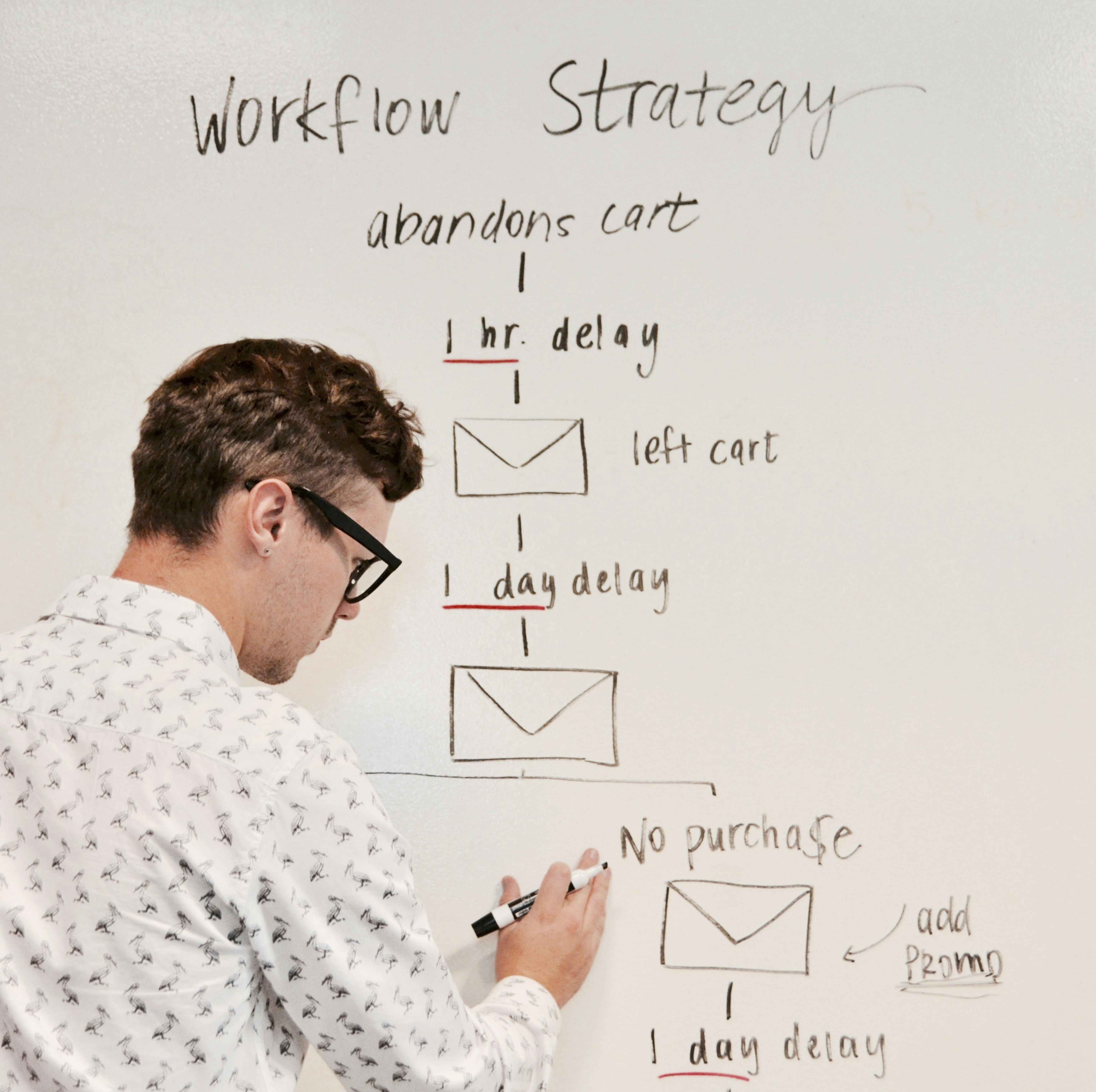
An abandoned cart is a near-conversion. The visitor has already selected a product, indicated intent to buy, and then stopped. Your job is to remove whatever barrier stood between them and the checkout. This isn't aggressive selling — it's problem-solving.
Brands with a three-email abandoned cart sequence recover 5–15% of abandoned carts. At scale, that's a significant revenue line from a flow that runs without human intervention.
Most brands treat the purchase as the end of the journey. High-retention brands treat it as the beginning. A post-purchase sequence does three things: reinforces the buying decision (reducing buyer's remorse and returns), creates the habit of opening your emails, and plants the seed for the next purchase.
Getting a second purchase from a customer is 5x cheaper than acquiring a new one. Your post-purchase flow is your most cost-effective retention tool.
Every list has a segment of subscribers who haven't opened or purchased in 90–180 days. Before they disengage entirely — or before you have to suppress them for deliverability reasons — a win-back sequence makes one last attempt to re-engage them.
The win-back works best when it's honest and direct. "We've noticed you haven't been around. Here's what's changed. Here's something worth coming back for." A small incentive helps, but authenticity matters more than discounting. Subscribers who re-engage through a win-back often become high-value customers — they've made a conscious choice to come back.
A step before cart abandonment — someone viewed a product or category but didn't add to cart. Lower intent than cart abandonment, but still a meaningful signal. A single automated email 4–6 hours after the session, featuring the products they browsed with curated recommendations, can drive 2–4% conversion on its own.
Set these five flows up once, QA them thoroughly, and let them run. Revisit and optimise quarterly. This is lifecycle marketing at its most efficient — and it's the difference between a business that works hard and a business that works smart.
Ready to build email flows that generate revenue without you touching them?
Trevant designs and builds lifecycle marketing systems on Klaviyo and ActiveCampaign. Book a free growth audit today.
Explore Real Strategies, Trends, and Tips to Help Your Brand Grow.